5 Creative Tests That Actually Move Cost Per Install
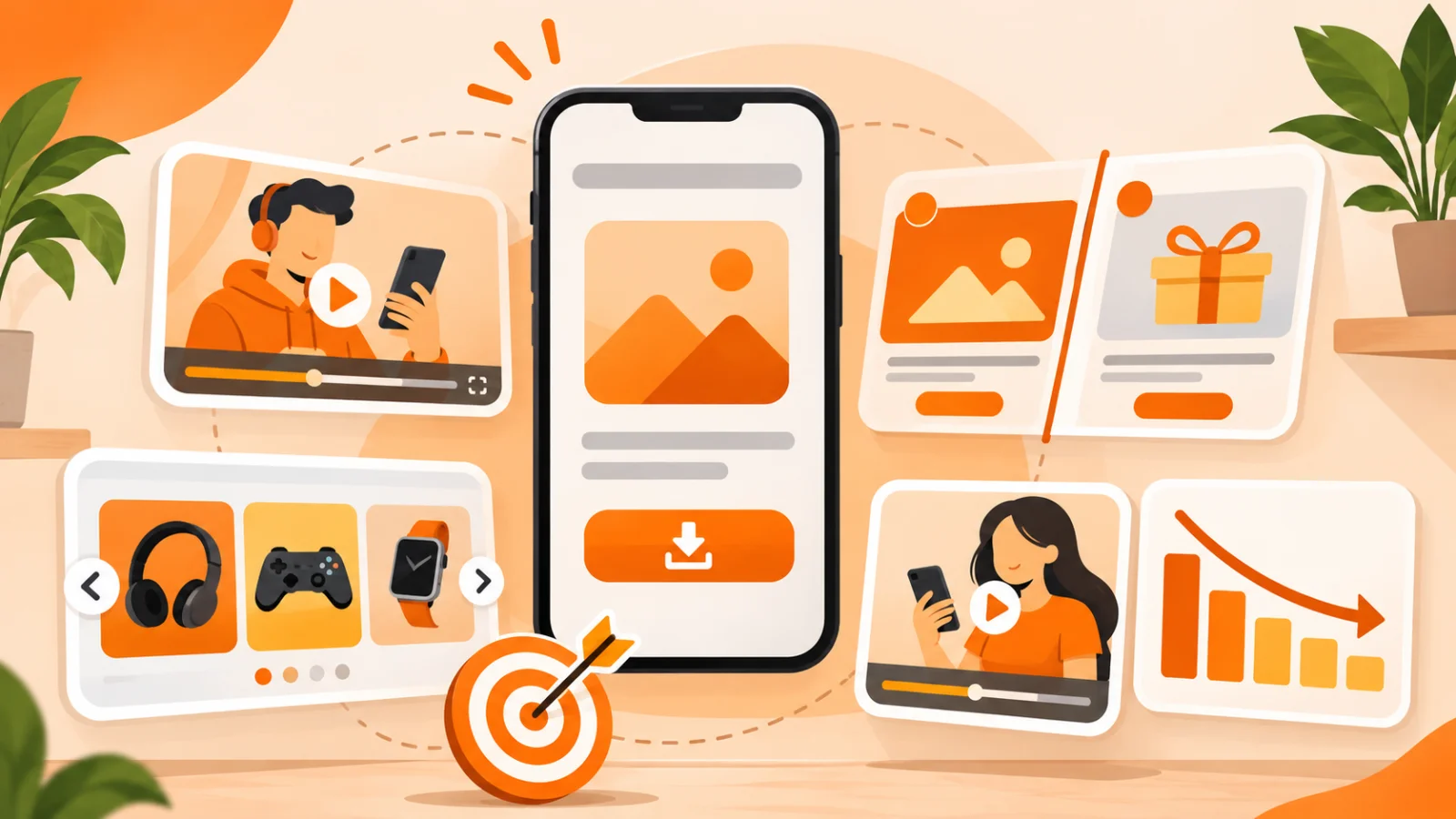
“Try a new thumbnail” is not a testing strategy. When cost per install (CPI) starts climbing, most app teams change a colour or a button and hope for the best. The creatives that move CPI in a real way come from testing the parts of an ad that change who stops, who clicks and who installs.
Here are five creative tests that consistently make a difference for user acquisition (UA) teams, plus a simple framework to run them properly.
1. Test the Hook, Not the Whole Ad
On Meta, TikTok and YouTube, the first two to three seconds decide whether anyone sees the rest. Keep the body of the video the same and change only the opening.
- Problem hook: open on the pain your app solves.
- Result hook: open on the outcome, such as a finished task or a saved amount.
- Pattern break: an unusual visual, sound or text that stops the scroll.
- Question hook: a direct question to the viewer.
Watch thumb-stop rate (3-second views divided by impressions) first, then CPI. A hook that lifts thumb-stop rate but not installs usually means the promise and the product do not match.
2. Test Formats Against Each Other
The same message can perform very differently depending on format. Run one message across several formats:
- Creator-style or UGC ads filmed on a phone
- Screen recordings of the app in use
- Motion graphics with bold text
- Static images and carousels
Format tests often reveal that a cheaper format, such as a simple screen recording, beats a high-budget video on CPI.
3. Test the Angle, Not the Copy
An angle is the reason someone should install. Changing a few words in the caption rarely moves CPI. Changing the angle often does.
- Feature angle: what the app does.
- Outcome angle: what the user gets.
- Social proof angle: ratings, reviews and number of users.
- Comparison angle: why it beats the old way of doing things.
Strong angles usually come from campaign concept work, user reviews and support tickets, not from the ad account.
4. Test Ad-to-Store Consistency
An ad can win the click and still lose the install if the store page tells a different story. Match the first screenshots and the short description to the angle of your best ads.
- Use custom product pages (App Store) or custom store listings (Google Play) for your main angles.
- Repeat the ad’s headline idea in the first screenshot.
- Keep colours and visual style consistent between ad and store.
This is where creative testing meets app store optimization, and where many teams find their quickest CPI wins.
5. Test the Ending and the Call to Action
The last seconds of an ad decide whether interest turns into a tap. Test the end card, not only the opening.
- Show the app icon and name clearly for at least two seconds.
- Test a direct CTA (“Install free”) against a benefit CTA (“Start saving today”).
- Try ending on a real app screen instead of a logo.
6. A Simple Framework to Run These Tests
Good tests follow a few rules. Without them, results are noise.
- Change one thing at a time. If the hook and the angle both change, you will not know which one worked.
- Give each variant enough data. As a rule of thumb, wait for a few dozen installs per variant before calling a winner.
- Set kill rules in advance. For example, pause any variant whose CPI is far above your target after a fixed spend.
- Look past CPI. Check day-1 and day-7 retention so cheap installs are not low-quality installs.
- Log every result. A shared sheet of hooks, angles and formats becomes your playbook for the next round.
Clean tracking makes all of this possible, which is why marketing analytics setup should come before scaling spend.
FAQ
How many creatives should a UA team test each month?
It depends on budget, but most teams do better with a steady flow of a few new concepts every week than with one large batch per month.
Which metric should decide a creative test?
Use thumb-stop rate and click-through rate to judge hooks, and CPI plus early retention to pick the final winner.
How long should a creative test run?
Run it until each variant has enough installs to compare, usually several days. Very short tests often pick the wrong winner.
Why does a winning creative stop working?
Creative fatigue. The same audience sees it too often. Keep testing new hooks and angles so you always have a replacement ready.
Conclusion
CPI moves when you test what really changes behaviour: the hook, the format, the angle, the ad-to-store match and the ending. Run one change at a time, give each test enough data and keep a record of what wins. If you want a team to plan, produce and scale these tests for you, our app marketing agency runs this process every week.